
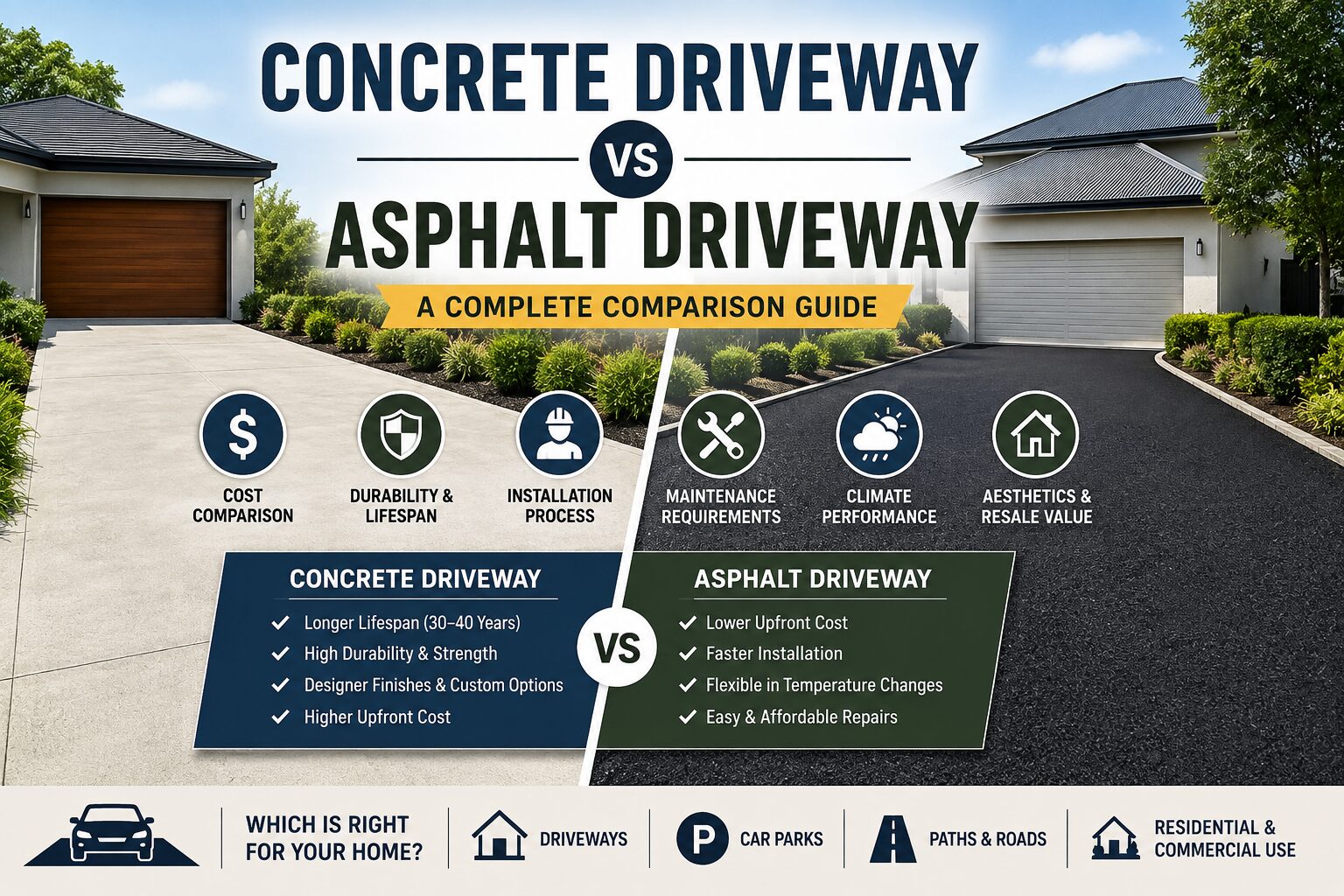
When it’s time to build a new driveway or resurface an old one, most Australian homeowners find themselves stuck on the same question: concrete or asphalt? Both materials are widely used across the country, both can handle daily traffic for decades, and both come with their own set of trade-offs.
The real difference comes down to the binder holding each material together. Concrete uses cement, while asphalt uses bitumen and this single difference shapes everything from cost and installation time to how each surface performs in Australia’s varied climate. If you’re also curious about how asphalt and bitumen relate to each other, our asphalt vs bitumen guide breaks that down in more detail.
In this guide, we’ll compare concrete driveway vs asphalt driveway across cost, durability, installation, maintenance, climate performance, aesthetics, and resale value so you can make the right call for your property.
What’s the Difference Between Concrete and Asphalt Driveways?
What Is a Concrete Driveway?
A concrete driveway is made by mixing cement, sand, and aggregate with water, which is then poured on-site and left to cure into a rigid, solid surface. Concrete is known for its clean finish, long lifespan, and design flexibility, with options like stamped patterns, exposed aggregate, and coloured finishes.
What Is an Asphalt Driveway?
An asphalt driveway is made by combining bitumen with crushed stone, sand, and gravel, then compacting the mixture while hot to form a durable, flexible surface. Asphalt is valued for its faster installation, lower upfront cost, and flexibility in changing temperatures.
The key distinction is the binder: cement gives concrete its rigidity and strength, while bitumen gives asphalt its flexibility and faster curing time. This is the same reason asphalt and bitumen are often confused with one another, even though they serve different roles.
Concrete Driveway vs Asphalt Driveway Cost
Cost is usually the first deciding factor for most homeowners, and it’s where asphalt tends to have a clear edge.
Average Cost Per Square Metre in Australia
Both materials generally fall in a similar starting range of around $25–$40 per square metre, though the final price depends on driveway size, site access, ground preparation, and finish. Asphalt tends to sit toward the lower end for large, straightforward driveways, while decorative concrete finishes can push costs well above this range.
Installation Cost Comparison
Asphalt installation is typically cheaper on a like-for-like basis because it requires less specialised labour, no curing period, and no expansion joints. Concrete installation costs more due to formwork, reinforcement, and longer curing times before the surface can bear weight.
Long-Term Cost of Ownership
| Factor | Asphalt | Concrete |
|---|---|---|
| Upfront cost | Lower | Higher |
| Repair cost | Lower, easy to patch | Higher, often needs full slab replacement |
| Resurfacing | Can resurface without removal | Usually requires demolition and removal |
| Resealing frequency | Every 2–3 years | Every 3–5 years (sealant) |
While asphalt wins on upfront affordability and repair costs, concrete’s longer lifespan can offset the higher initial spend over a 30–40 year timeframe.
Durability & Lifespan Comparison
How Long Does an Asphalt Driveway Last?
A well-installed and properly maintained asphalt driveway typically lasts 15–20 years, and sometimes longer with regular resealing and prompt crack repairs.
How Long Does a Concrete Driveway Last?
Concrete driveways generally last longer, often 30–40 years, thanks to their rigid structure and resistance to daily wear.
Crack Resistance and Structural Behaviour
Asphalt is more flexible, so it tends to expand and contract with temperature changes rather than cracking outright though it can develop surface cracks and potholes over time. Concrete is more rigid and holds its shape well under normal conditions, but when it does crack, the damage is more noticeable and harder to repair invisibly.
| Feature | Asphalt | Concrete |
|---|---|---|
| Average lifespan | 15–20 years | 30–40 years |
| Flexibility | High | Low |
| Crack behaviour | Small cracks, easy to patch | Larger cracks, visible repairs |
| Load capacity | Good for residential use | Excellent, handles heavier loads |
Installation Process & Curing Time
One of the most practical differences between these two materials is how quickly you can actually use your new driveway.
Asphalt Installation Timeline
Asphalt can usually be walked on within 24 hours and driven on within a few days of installation, since it doesn’t require a curing period the way concrete does.
Concrete Installation & Curing Timeline
Concrete needs significantly longer to cure typically 5–7 days before it can handle vehicle weight, and up to a few weeks to reach full strength.
If minimising downtime matters to you, particularly for a home with only one driveway, asphalt’s faster turnaround is a genuine practical advantage.
Climate Suitability Across Australia
Australia’s climate varies dramatically from state to state, and this has a real impact on which material performs best.
Best Driveway Material for Hot Climates (QLD, WA, NT)
In consistently hot regions, asphalt’s flexibility helps it handle thermal expansion without cracking, though extreme heat above roughly 35°C can cause it to soften slightly. Concrete holds up well structurally in heat but is more prone to surface cracking under prolonged thermal stress.
Best Driveway Material for Cold or Frost-Prone Areas (VIC, Snowy Mountains)
In colder regions prone to frost, concrete becomes more vulnerable to freeze-thaw cracking, while asphalt’s flexibility generally makes it more resilient to these temperature swings.
General Weather Resistance
Both materials handle Australian rainfall and UV exposure reasonably well, though asphalt’s darker surface absorbs more heat, while concrete’s lighter surface reflects more glare a factor worth considering for both comfort and safety.
Maintenance & Repairs
Asphalt Driveway Maintenance Schedule
Asphalt needs periodic resealing, generally every 2–3 years, along with prompt attention to small cracks before they widen into potholes.
Concrete Driveway Maintenance Schedule
Concrete requires less frequent sealing, typically every 3–5 years, but repairs are more involved when cracks or surface damage do occur.
| Maintenance Task | Asphalt | Concrete |
|---|---|---|
| Sealing frequency | Every 2–3 years | Every 3–5 years |
| Crack repair | Quick, low-cost patching | Often requires slab replacement |
| Weed/ant resistance | Good | Good |
| Stain resistance | Hides oil stains well (dark surface) | Prone to visible staining |
Aesthetic & Design Options
Concrete Finishes
Concrete offers far more design flexibility, with options like stamped patterns, exposed aggregate, and a range of custom colours ideal for homeowners who want their driveway to match a specific architectural style.
Asphalt Colour and Texture Options
Asphalt is traditionally available in dark grey to black tones, though some suppliers now offer coloured or textured asphalt for a more customised look. Its darker tone also helps reduce glare compared to lighter concrete or limestone surfaces.
Which Looks Better for Modern vs Traditional Homes
Concrete tends to suit modern, minimalist homes where a clean, customisable finish is a priority, while asphalt’s uniform dark surface often complements larger driveways, semi-rural properties, and homes prioritising function over decorative detail.
Environmental Considerations
Recycled Asphalt and Sustainability
Asphalt is one of the most recycled materials in Australia, with reclaimed asphalt pavement (RAP) commonly reused in new asphalt mixes, reducing the need for virgin materials.
Permeability and Drainage Impact
Certain porous asphalt mixes allow better water drainage than standard concrete, which can help reduce surface pooling and runoff in wetter climates.
Carbon Footprint Comparison
Concrete production is generally more energy-intensive due to cement manufacturing, while asphalt production and recycling processes tend to have a comparatively lower carbon footprint, though this varies by supplier and process.
Impact on Property Resale Value
A well-maintained driveway, regardless of material, contributes to kerb appeal and can influence a buyer’s first impression. Concrete’s clean, customisable finish often appeals to buyers looking for a premium aesthetic, while a smoothly resurfaced asphalt driveway signals low maintenance and practicality. In most cases, the condition of the driveway matters more to resale value than the material itself.
Concrete vs Asphalt Driveway — Pros and Cons
Pros and Cons of Concrete Driveways
PROS:
- Longer lifespan (30–40 years)
- Highly customisable finishes and colours
- Excellent load-bearing capacity
- Less frequent sealing required
CONS:
- Higher upfront cost
- Longer curing time (5–7 days)
- Cracks are more visible and costly to repair
- More prone to frost damage in cold climates
Pros and Cons of Asphalt Driveways
PROS:
- Lower upfront and repair costs
- Fast installation and curing (usable within days)
- More flexible, handles temperature changes well
- Easier to resurface without full removal
CONS:
- Shorter lifespan (15–20 years)
- Limited colour and design options
- Can soften in extreme heat
- Requires more frequent resealing
Which Driveway Material Should You Choose?
Use this quick checklist to help guide your decision:
- Budget: If upfront cost is the priority, asphalt is generally the more affordable choice.
- Climate: In frost-prone areas, asphalt’s flexibility is an advantage; in extreme heat, both materials need proper installation to perform well.
- Timeline: If you need the driveway usable within days, asphalt is the faster option.
- Aesthetic preference: If you want a custom, decorative finish, concrete offers more design flexibility.
- Maintenance tolerance: If you prefer fewer, larger maintenance jobs over frequent small ones, concrete may suit you better.
Still unsure which material fits your property? Getting a professional on-site assessment and quote is the best way to make a confident, informed decision.
Frequently Asked Questions
What is the best driveway material in Australia?
Asphalt is a popular driveway material in Australia due to its affordability, faster installation, and flexibility in variable weather conditions. Concrete is a strong alternative for homeowners prioritising longevity and custom design over upfront cost.
Is asphalt cheaper than concrete in Australia?
Yes, asphalt is generally cheaper than concrete both in upfront installation cost and ongoing repairs, though decorative concrete finishes can widen this cost gap further.
What lasts longer, an asphalt or concrete driveway?
Concrete typically lasts longer than asphalt, with a lifespan of 30–40 years compared to asphalt’s 15–20 years, assuming both are properly installed and maintained.
What are the pros and cons of concrete vs asphalt driveways?
Concrete offers greater durability and design flexibility but comes with a higher cost and longer curing time. Asphalt is more affordable and quicker to install but has a shorter lifespan and fewer aesthetic options.
Can I convert an asphalt driveway to concrete, or vice versa?
Yes, though converting from concrete to asphalt is usually more straightforward, since asphalt can often be laid over a properly prepared existing surface. Converting from asphalt to concrete typically requires full removal of the old surface first.
Conclusion
Choosing between a concrete driveway and an asphalt driveway ultimately comes down to your budget, timeline, and priorities. Asphalt offers a faster, more affordable option with easier repairs, making it a practical choice for larger driveways and properties where cost and convenience matter most. Concrete, on the other hand, delivers a longer lifespan and greater design flexibility, making it well suited to homeowners who want a premium, long-term finish. Weighing up your climate, budget, and aesthetic goals will help you land on the option that works best for your home.