
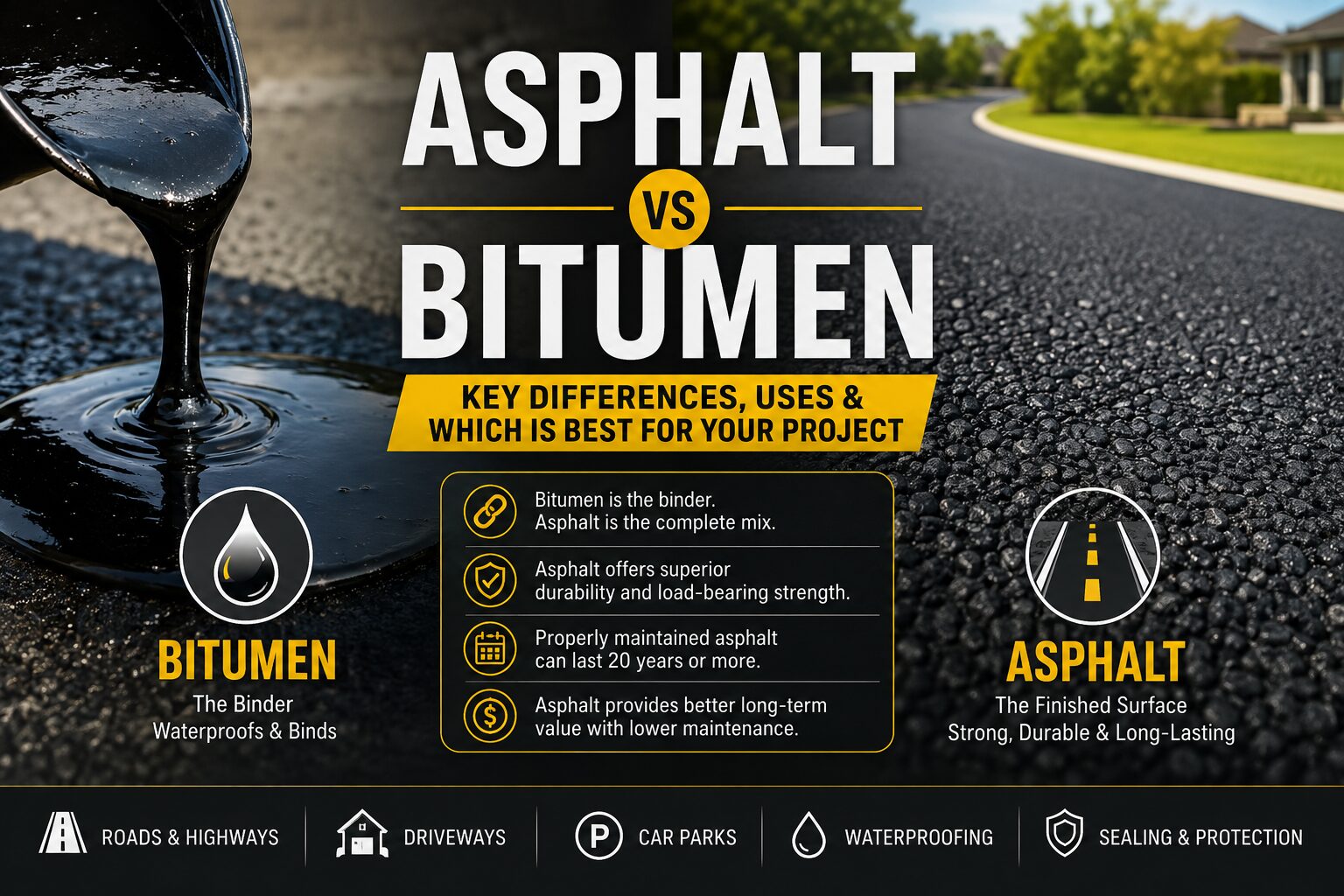
When comparing asphalt vs bitumen, many people assume they are the same material. In reality, they serve different purposes in road construction and road surfacing. Bitumen is a binder made from refined petroleum, asphalt is a paving material made by combining bitumen with mineral aggregates such as crushed stone, sand, and gravel, creating a strong and durable surface.
Understanding the difference between asphalt and bitumen is important when choosing the right surface for a residential driveway, car park, or road project. In this guide, we’ll explain what is asphalt, what is bitumen, how they work together, their key differences, common applications, lifespan, and which option offers the best long-term value for your project.
What Is Asphalt?
Asphalt is a strong mixture made by combining bitumen with materials such as crushed stone, sand, and gravel. It is widely used for roads, driveways, car parks, highways, footpaths, and airport runways. Available in forms such as Hot Mix Asphalt (HMA) and Warm Mix Asphalt (WMA), asphalt provides excellent durability, crack resistance, and load-bearing strength, making it a reliable choice for both residential and commercial paving.
What Is Bitumen?
Bitumen is a thick, black hydrocarbon binder produced by refining crude oil. It is widely used in road construction, paving, and waterproofing because it binds materials together and provides resistance to water and weather.
In asphalt production, bitumen is combined with mineral aggregates such as crushed stone, sand, and gravel to create a durable asphalt mix. It can also be used separately in applications such as bitumen emulsion, spray sealing, tack coats, and prime coats.
Asphalt vs Bitumen: Key Differences
The main difference between asphalt and bitumen is what they are made for.
| Feature | Bitumen | Asphalt |
| Composition | Petroleum-based binder | Bitumen + aggregates |
| Main purpose | Binding and waterproofing | Road and pavement surfacing |
| Durability | Suitable for sealing applications | Highly durable under regular traffic |
| Cost | Generally lower upfront cost | Higher initial cost but better lifecycle value |
| Applications | Spray sealing, waterproofing, tack and prime coats | Roads, driveways, car parks and highways |
For many paving projects, asphalt can offer better long-term value because its durable surface requires less frequent maintenance and can withstand regular traffic and weather exposure. The right choice ultimately depends on the project, traffic levels, surface requirements, and expected lifecycle cost.
How Are Asphalt and Bitumen Connected?
Bitumen is the binder, while asphalt is the finished paving material. Bitumen is a sticky, black petroleum-based substance that binds materials together. When it is mixed with crushed stone, sand, and gravel, it forms an asphalt mix.
Think of bitumen as the “glue” that holds asphalt together. Without the bitumen binder, the aggregates would not form the strong, flexible, and durable surface used for roads, driveways, and car parks.
Why Asphalt Is the Preferred Choice for Roads and Driveways
Asphalt is a preferred choice for roads and driveways because it offers durability, flexibility, and long-term performance.
- Longer lifespan: Properly maintained asphalt can last 20 years or more.
- Handles heavy traffic: Its strong load-bearing capacity suits busy roads, driveways, and car parks.
- Smooth and quieter: Asphalt provides a smoother surface with less loose aggregate.
- Weather resistant: Its durability and flexibility help it withstand regular wear and changing weather.
For long-term performance and a reliable finished surface, asphalt paving is often the better choice.
Frequently Asked Questions
Are roads asphalt or bitumen?
Most roads are surfaced with asphalt, not pure bitumen. Bitumen acts as the binder that holds these materials together and helps form a durable road surface.
Is bitumen good for a driveway?
Bitumen can be used for driveways, particularly in spray-sealed applications. However, asphalt generally provides a smoother, more durable surface and is often better suited to driveways with regular vehicle traffic.
What is the best driveway material in Australia?
Asphalt is a popular driveway material in Australia because it offers durability, flexibility, and good resistance to regular traffic and weather conditions. With proper installation and maintenance, it can provide long-term value.
Is asphalt cheaper than bitumen?
Bitumen alone is generally cheaper upfront since it’s just the binding material. Asphalt costs more initially because it includes aggregates and installation, but it typically offers better durability and lower maintenance costs over time, making it more cost-effective in the long run.
How long does bitumen last compared to asphalt?
Bitumen surfaces, especially spray-sealed applications, typically need resealing every 7–10 years and are more prone to cracking and loose stones over time. Asphalt, when properly installed and maintained, can last 20 years or more, making it a more durable long-term option.
Can bitumen be used without asphalt?
Yes, bitumen can be used on its own for applications like spray sealing, waterproofing, tack coats, and prime coats. However, for surfaces that need to handle regular vehicle traffic, such as driveways and roads, it’s usually combined with aggregates to form asphalt for added strength and durability.
Conclusion
Choosing between asphalt and bitumen doesn’t have to be confusing once you understand how they work together. Bitumen is the binder that holds materials together, while asphalt is the finished, durable surface made by combining that binder with aggregates like stone, sand, and gravel. For most driveways, car parks, and road projects, asphalt offers better long-term value thanks to its strength and durability, while bitumen remains ideal for sealing and waterproofing needs. The right choice ultimately depends on your project’s traffic levels, budget, and expected lifespan.